


3 min readUpdated:
Cost starts with a clear production brief
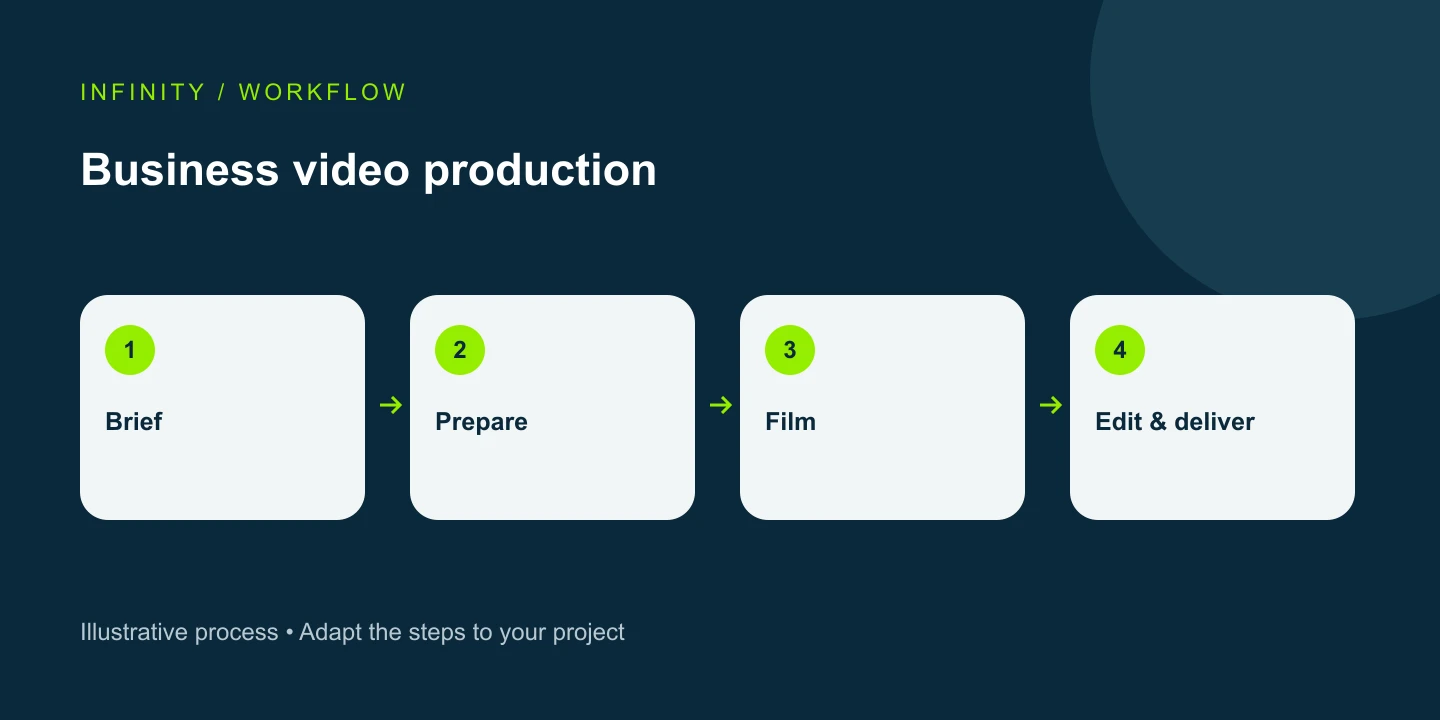
To compare business video production costs, first define what the company needs to receive. An interview, product demonstration and series of short clips require different preparation. The budget includes more than camera time: scripting, crew, locations, sound, editing and deliverable versions all matter. A written scope reduces misunderstandings and avoids discovering late in production that an essential format was never included.
Define the audience and distribution channel
Choose the primary goal: explain a service, establish trust, demonstrate a product or encourage an enquiry. Then specify who will watch and where. A website video and a mobile social version can require different framing. YouTube identifies 16:9 as its standard desktop aspect ratio while its player adapts to other formats. Plan deliverables for their actual destinations rather than assuming a single export works equally well everywhere.
Pre-production is part of the work
Approve the brief, script, interview questions, shot list and schedule before filming. Check location noise, lighting and availability. Employees appearing on camera should know the topic and timing. Itemise actors, studio hire, transport and specialised props when needed. Existing footage may reduce some work, but it still needs a quality and usage-rights check. Decide who approves the script and what happens if that approved brief changes later.
What changes the shoot scope?
Producing several short clips in one office session is different from visiting multiple sites. The job may require a camera operator, sound specialist, lighting support or presenter. Add a drone, extra camera or complex movement because it serves the message. Allow for setup, tests and outdoor weather conditions. The final running time alone is a poor measure of production effort: a short, carefully staged sequence can take longer than a straightforward interview.
Editing, audio and versions
Specify footage selection, editing, colour work, sound cleanup, music, graphics and subtitles. Agree on languages, aspect ratios, cover frames and revision rounds. Adapting an approved edit to a different aspect ratio can require reframing and moving on-screen text. Nominate one person to consolidate feedback. Conflicting comments from multiple reviewers can extend a project even when the original filming scope was small.
Compare two illustrative scopes
An office interview with three vertical excerpts may share one script and one filming session. A company film with several locations, interviews and animated graphics is a different scope. This comparison is illustrative, not a price promise. Compare location count, production days, final files and revision rounds. Keep paid distribution separate from production fees, and make sure any music or stock-asset licence covers the intended usage.
What to send a production team
Include the goal, audience, approximate length, channels, deadline, locations and participants. Provide visual references and explain what you like about them. List available materials, brand rules and required languages. Ask whether raw footage is included, how long files will be retained and how additional revisions are priced. A useful estimate should expose assumptions, dependencies and exclusions, so you can compare alternatives on the same basis.
Frequently asked questions
Why do quotes vary? Preparation, crew, equipment and deliverables differ. Does production include advertising spend? Only when separately stated in the proposal. Can one shoot provide several videos? Often, if the shot list, messaging and formats are planned in advance; this is not automatic for every piece of footage.
Request an estimate for your project
Video production — We define the scope around your business needs. Consultation.