CRM System Implementation

Tailored to real processes

Control over your data

Independence from external systems

Free consultation

Want a custom offer?

Leave your contact details — our specialist will reach out shortly.

5.0 Google Reviews11+ years of experience500+ projects5.0 Google Reviews11+ years of experience500+ projects5.0 Google Reviews11+ years of experience500+ projects5.0 Google Reviews11+ years of experience500+ projects

Testimonials

Tabatea
The speed of communication and the professionalism deserve a special mention.
Tabatea
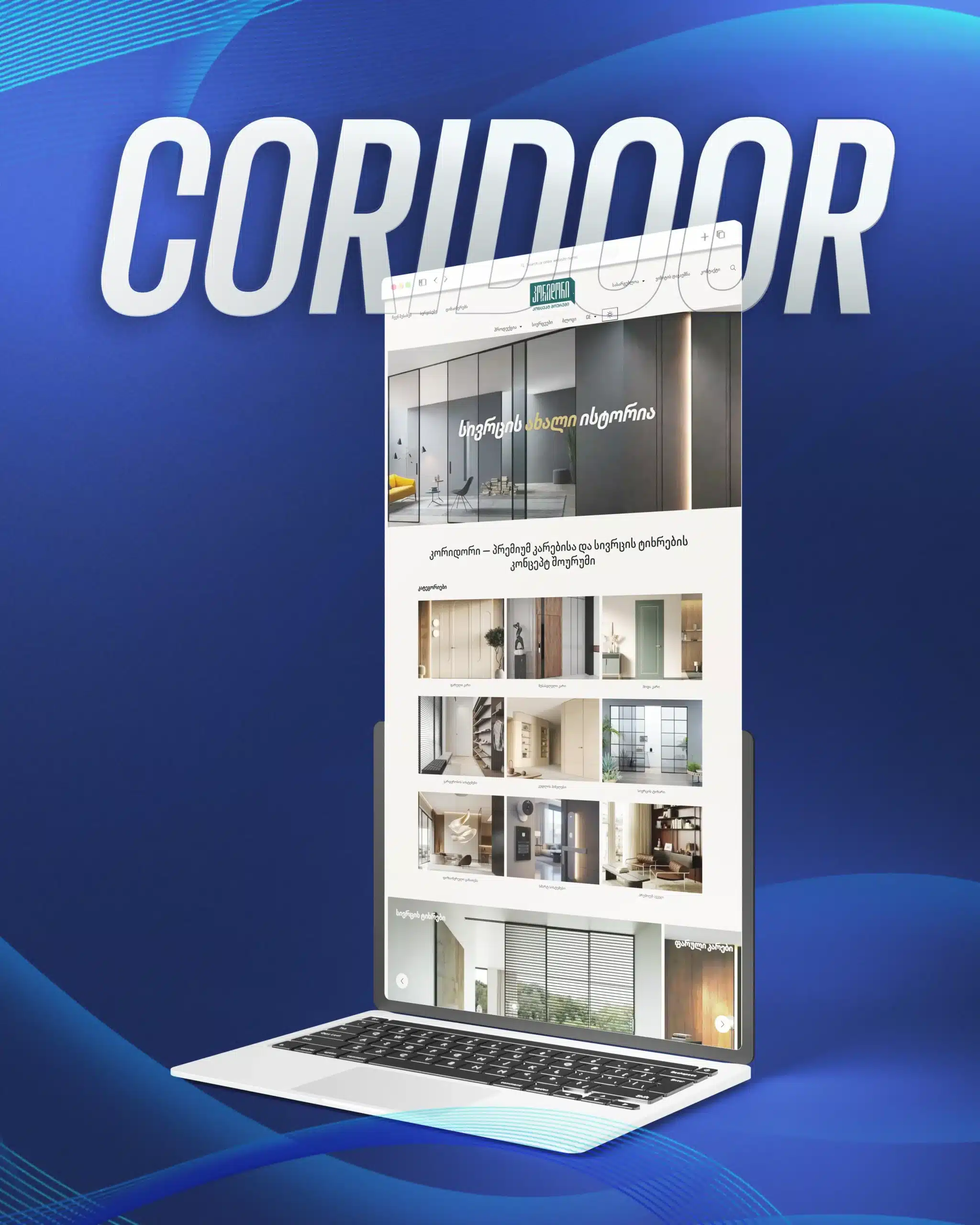
Coridoor
The work was completed within the agreed deadlines, which reflects a high standard of project management.
Coridoor
Dignified Aging
The team's flexibility, quick response and the transparency of the whole collaboration are worth noting.
Dignified Aging
ALCO OUTLET
We are very pleased with the result and would gladly recommend them.
ALCO OUTLET
Mr. CREDIT
Organised, refined, tasteful, practical.
Mr. CREDIT
LTD Locks
I was pleasantly surprised by the team's work and by their communication.
LTD Locks

Partners

Or simply give us a call

+995 575 75 75 77

What is a CRM system?

CRM is a customer relationship management system.

Put simply, it is a space that brings together client data, requests, calls, correspondence, sales stages, tasks, orders and reports.

A good CRM system helps a business make sure that no client is lost and no important matter is left unattended.

When does a business need a CRM?

A CRM system is needed when:

  • your client data is spread across different files or chats
  • the sales team cannot keep track of every request
  • the manager has no accurate picture of who is doing what
  • follow-ups are often forgotten
  • it is hard to tell how many leads, offers or sales you have
  • the history of orders, services or communication gets lost
  • the business is growing and managing it with the old methods no longer works

If these situations sound familiar, a CRM is no longer a need – it is the next step.

What does Infinity offer?

We build a CRM system tailored to your business process.

At the first stage we learn how the company works today. How you receive requests, who answers the client, how a lead moves into a sale, where time is lost and what information the manager needs in order to make a decision.

After that we set up a system that is genuinely used in day-to-day work.

A CRM system can include

Client database

All client information in one space: name, phone number, e-mail, company, status, comments, history and the responsible employee.

Lead management

The system shows where the request came from, what stage the client is at and who is working on it.

Sales Pipeline

You see the entire sales process in stages: new request, contact, offer, negotiation, sale or rejection.

Tasks and reminders

Employees can add tasks, mark deadlines and keep follow-ups under control.

Order or service management

A CRM can be adapted both to sales and to a service process. For example: receiving an order, changing its status, monitoring fulfilment and storing the history.

Employee management

The manager can see who is working on how many requests, what stage each case is at and where the delay is.

Reports and analytics

The system shows the key data: how many leads came in, how many turned into clients, which channel brings results and where the sale is lost.

Integrations

If needed, the CRM can be connected to a website, contact forms, an online store, e-mail, advertising sources or other systems.

Why a custom CRM and not just a ready-made system?

A ready-made CRM is good in many cases, but not every business has the same process.

One company needs sales control. Another – order management. A third – control over couriers, sites, subscribers, invoices or service stages.

The main advantage of a custom CRM is that the system adapts to your process and not the other way around.

You do not have to use unnecessary features, get lost in complicated menus or force your team to work in an unnatural way. The system is built the way your business actually works.

website administration process

How do we work?

1. Consultation and study of your process

We find out what problem you have today and what the CRM should simplify.

2. Planning the structure

We define which modules, roles, statuses, filters and reports you will need.

3. Design and logic

We build a simple, clear interface so that the team can use the system without extra difficulty.

4. Development

We build the CRM system with the agreed functionality and the necessary integrations.

5. Testing and handover

We test the system in real scenarios, fix the details and give you a platform that is ready to use.

6. Support

Even after handover we can help you with changes, additional features and the further development of the system.

Who will benefit from a CRM system?

A CRM is especially useful for companies that have many clients, many requests or a repeat sales process.

For example:

  • sales teams
  • service companies
  • construction and renovation companies
  • clinics and medical centers
  • training centers
  • distribution and wholesale
  • online stores
  • real estate companies
  • auto services
  • B2B companies
  • companies that need to manage internal processes

What results will you get?

A well-built CRM system gives a business control.

You see how many requests come in, who is working with a client, where the process stalls and what needs to be fixed. The team no longer loses information, the manager no longer has to check everything by hand, and communication with the client becomes better organized.

A CRM is not just a program. It is a system that reduces the daily chaos in a business.

Why Infinity?

Infinity works on web systems, websites, applications, SEO and digital marketing. That is why we do not look at a CRM from the technical side alone.

For us it matters that the system is simple, fast, clear and tailored to the real goal of the business.

We build a CRM that does not make work harder for employees and gives the manager an accurate picture.

11 years, 500+ projects and experience of working with companies from different fields allow us to plan a CRM system not theoretically, but on the basis of practical needs.

Do you need a CRM system?

If you want to bring clients, sales, tasks and your team's work together in one space, write to us.

Let's talk about your process and we will tell you what kind of CRM system will be the right one for your business.


Why is a dependent CRM system not enough?

A CRM system stores some of the most important information for a business: the client database, sales history, calls, correspondence, tasks, offers, orders and the team's daily work process.

That is why a CRM should not be just a program we pay for once a month. A CRM should be a system that the business controls.

Many companies use ready-made CRM platforms. Sometimes that is a good solution, especially at the start. But when the business grows and the CRM becomes the center of daily work, the main question comes up: what happens if this system becomes more expensive, the terms change, the features are limited, the service goes down or moving the data turns out to be difficult?

This is not a theoretical risk. International official sources also treat vendor lock-in as a real problem for business. Vendor lock-in means a situation where a company is so tied to one provider that moving to another system is difficult, expensive or risky.

The main problem with a dependent CRM is that an important part of your business is tied to someone else's terms.

What are the risks of relying entirely on an external CRM?

1. The price can change

An external CRM platform may look affordable today, but the price may go up in the future. The fee often depends on the number of users, additional modules, automations, the API, storage or premium features.

When the whole team is already working in that system, switching after a price increase is no longer simple.

With an independent CRM the system is tailored to your business and you are not tied to an outside platform's pricing policy.

2. Migrating the data can turn out to be difficult

Over the years a CRM accumulates client history, comments, statuses, sales stages and employee activity.

If the system is closed or the data is not properly exportable, moving to another platform can become a difficult process. Sometimes a company has the data but cannot transfer it in a form that can be used properly in the new system.

An independent CRM can be planned from the very start so that data export, backup and migration are simple.

3. The service can go down

Any external platform can have a technical outage. And a CRM going down means that the sales team cannot see the clients, cannot check the tasks, cannot continue the process and management loses control.

If the CRM is your business's main working system, its availability is critical.

With an independent CRM it is possible to tailor the infrastructure, the backup, the access rights and the recovery plan to your needs.

4. You do not have full control over security

A CRM often stores personal data, commercial offers, prices, contracts, client history and internal comments.

When you use an external system, you partly trust the provider's security, its subcontractors, servers, updates and policies.

An independent CRM gives you the possibility to define the security rules, access rights, roles, backup, logs and the data storage logic by your own business's standard.

5. The features do not always fit your process

A ready-made CRM tries to fit many businesses at once. That is why it often has many unnecessary features and sometimes lacks exactly what a particular company needs.

As a result the team works not the way the business needs, but the way the program allows.

An independent CRM is built according to the real process: how a request comes in, who takes it, what stages the client goes through, what the manager has to see and what the employee has to do every day.

6. Integrations can be limited

A business often needs to connect the CRM to a website, an online store, Google Ads, GA4, forms, internal databases, accounting, a warehouse or other systems.

In a ready-made CRM these integrations are sometimes paid, limited or require additional third-party services.

In an independent CRM the integrations are planned from the very beginning, according to your real working process.

Why does a business need an independent CRM?

An independent CRM is especially important for companies where working with clients, sales, orders or the service process is a daily matter.

Such a system gives a business:

  • more control over the data
  • less dependence on an external platform
  • simple backup and data storage
  • functionality tailored exactly to your process
  • management of employee roles and access rights
  • transparent control of sales and tasks
  • the integrations you need with the website, advertising and other systems
  • more flexible development in the future
  • better protection against unexpected price increases
  • a system that grows together with your business

A CRM should not be just a list of clients. A good CRM is an internal business management system where you can see what is happening in sales, who is doing what, where the process stalls and what needs to be fixed.

What does Infinity offer?

At Infinity we build independent CRM systems that are set up around the needs of a specific business.

We do not start by simply putting a program together. First of all we learn how your business works today: how a request comes in, who answers the client, how a lead moves into a sale, where time is lost and what information the manager needs in order to make a decision.

After that we plan the structure of the CRM and build a system that is genuinely used in day-to-day work.

The CRM can be connected to your website, contact forms, an online store, advertising channels, analytics and other internal systems.

If you need a website as well, you can take a look at our service:
https://infinity.ge/en/services/saitis-damzadeba/

An independent CRM – more control over your business

An external CRM can be a good temporary solution, but when the client database, sales and the team's work become critical for the business, an independent CRM is the more correct decision.

This is not only a technical choice. It is control over your data, your processes and your future development.

Infinity will help you build a CRM system that adapts to your business and not the other way around.


Frequently asked questions

What is a CRM system?

CRM is a system where client information, sales stages, tasks, calls, correspondence, orders and the team's work process all come together in one space. Its purpose is to help a business control client relationships better and not lose important requests.

How does an independent CRM differ from a ready-made CRM platform?

A ready-made CRM is an already built system used by many different companies. An independent CRM, on the other hand, is created around the process of a specific business. In that case the features, roles, statuses, reports and integrations are set up the way your company actually works.

What is the risk of relying entirely on an external CRM?

An independent CRM gives a business more control over the data, the processes and the development of the system. The company is no longer fully dependent on an external platform's prices, terms, limitations or technical changes.

Is an independent CRM more secure?

The main difference is control. When you use an external platform, you partly trust the provider's security — its servers, subcontractors, updates and policies. In an independent CRM the security rules, access rights, roles, backup, logs and the data storage logic are defined by your own business's standard. That does not automatically mean more protection — the result depends on how carefully those rules are planned.

What features can a CRM system have?

A CRM can include a client database, lead management, a sales pipeline, tasks and reminders, order or service management, employee management, reports and analytics, as well as integrations with other systems. The exact set depends on your business process: which modules, roles, statuses, filters and reports you will need is defined at the structure-planning stage.

Is it possible to connect the CRM to a website?

Yes. A CRM can be connected to your website and contact forms, an online store, e-mail, advertising channels (Google Ads, for example), analytics (GA4) and other internal systems. Such integrations are planned from the very beginning, according to your real working process, so that a request coming in from the site lands directly in the CRM instead of getting lost.

Who needs a CRM system the most?

A CRM is needed most by companies that have many clients, many requests or a repeat sales process: sales teams, service companies, construction and renovation companies, clinics and medical centers, training centers, distribution and wholesale, online stores, real estate companies and auto services. The practical sign is that client data is spread across different files and chats, follow-ups are often forgotten, and the manager has no accurate picture of who is doing what.

Is it possible to migrate an existing Excel file or an old database into the CRM?

Yes, such a migration is possible. At the consultation and structure-planning stage we review the existing file or database and plan how its fields will move into the CRM's client database: name, phone number, e-mail, company, status, comments, history and the responsible employee. An independent CRM is planned from the very start so that data export, backup and migration are simple, so the amount of preparatory work depends on how well organized the existing data is.

Is a CRM used only for sales?

No. The sales pipeline is only one part of the system — the same CRM can handle receiving orders and the service process, changing statuses and monitoring fulfilment, tasks and reminders, employee workload, as well as reports and analytics. A good CRM is not just a list of clients — it is an internal business management system where you can see what is happening in sales, who is doing what, where the process stalls and what needs to be fixed.

How long does it take to build a CRM system?

The exact timeframe depends on the scope of the project: how many modules, roles, statuses, filters and reports you will need, and how complex the required integrations are. We agree on the timeline at the consultation and structure-planning stage, before development begins. Before handover we test the system in real scenarios and fix the details, so the time for testing is accounted for from the start.

How much does it cost to build a CRM system?

There is no fixed price — the cost is defined by which modules, roles, statuses, reports and integrations the system includes. We name a specific budget after studying your process and planning the structure. Unlike ready-made platforms, where the fee depends on the number of users, additional modules, automations, the API, storage or premium features, an independent CRM is not tied to an external platform's pricing policy.

Is it possible to develop the CRM further in the future?

Yes. An independent CRM is built precisely so that it grows together with your business — over time new modules, roles, statuses, reports and integrations can be added. Even after handover we can help you with changes, additional features and the further development of the system.

Why should we order a CRM from Infinity?

Infinity works on web systems, websites, applications, SEO and digital marketing, which is why we do not look at a CRM from the technical side alone. We do not start by simply putting a program together — first we learn how a request comes in, who answers the client, how a lead moves into a sale and where time is lost, and only then do we build the system around that process. The result is a simple, fast and clear CRM that does not make work harder for employees and gives the manager an accurate picture.

How do we start work on a CRM system?

Getting started is simple — write to us and let's talk about how your company works today and what the CRM should simplify. After the consultation and the study of your process we plan the structure: which modules, roles, statuses, filters and reports you will need. Design and logic, development, testing and handover follow, and support after handover.

Free Consultation