

5 min read
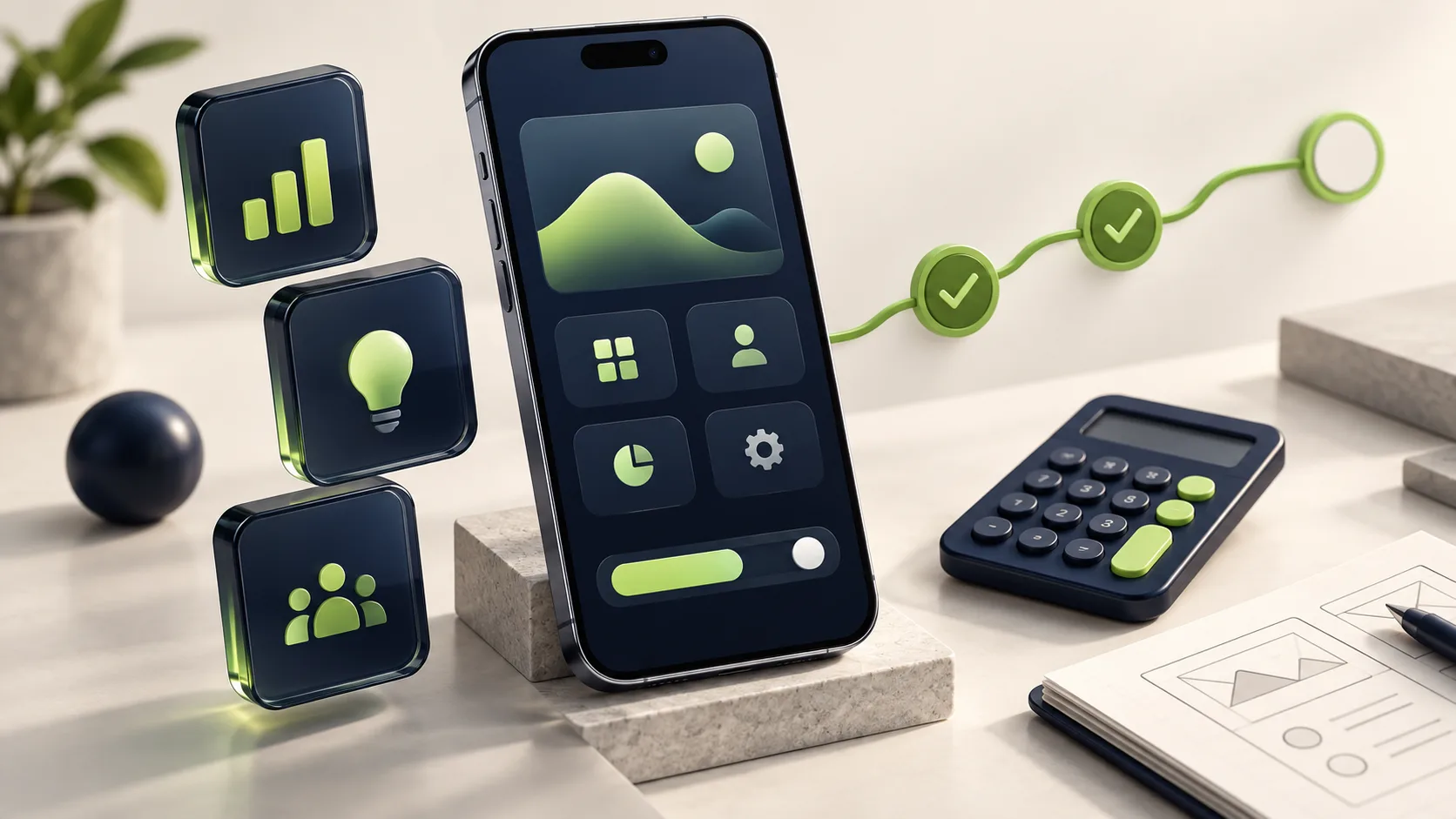
Mobile app development cost depends on the problem the product solves, who uses it and which systems it connects to. Screen count alone is not enough: a single booking or payment feature can involve several user roles, an administration panel and complex business rules.
This guide explains how to plan a minimum viable product (MVP), compare proposals and prepare for an estimate. To discuss your project, explore our app development service.
What determines the cost of building an app?
User roles and workflows
Customers, employees and administrators often need different permissions. Booking is more than selecting a time: availability, cancellation rules, confirmation and notifications must also be defined. Clear workflows make the scope easier to estimate.
Platforms and device capabilities
A project may cover Android, iOS, a web application or a combination. Camera access, location, offline functionality and notifications need planning and testing. Sharing code between platforms can help in some projects, but it does not automatically halve the cost of every feature.
Design and prototyping
A prototype lets you assess the user journey before development. Include error, empty, loading and success states alongside the main screens. This helps identify changes before working features need to be rebuilt.
Administration and integrations
Who updates prices, manages orders or handles enquiries? Apps often need an administration panel and a backend. Payment, messaging, mapping and CRM connections also depend on the capabilities of the external systems.
If the main objective is managing sales and customer information, consider CRM implementation first. Configuring an existing CRM may solve the problem, or your app may need to connect to it.
What should an MVP do?
An MVP is a minimum viable product: a focused set of features that lets real users complete the main task and helps the team test whether the product is valuable. It is more than a visual mockup and is not a reason to release an unreliable application.
Start with one sentence: “Our user will be able to ___ so that ___.” Ask whether each proposed feature is essential to completing that action. If the user can complete it without the feature, that feature may belong in a later phase.
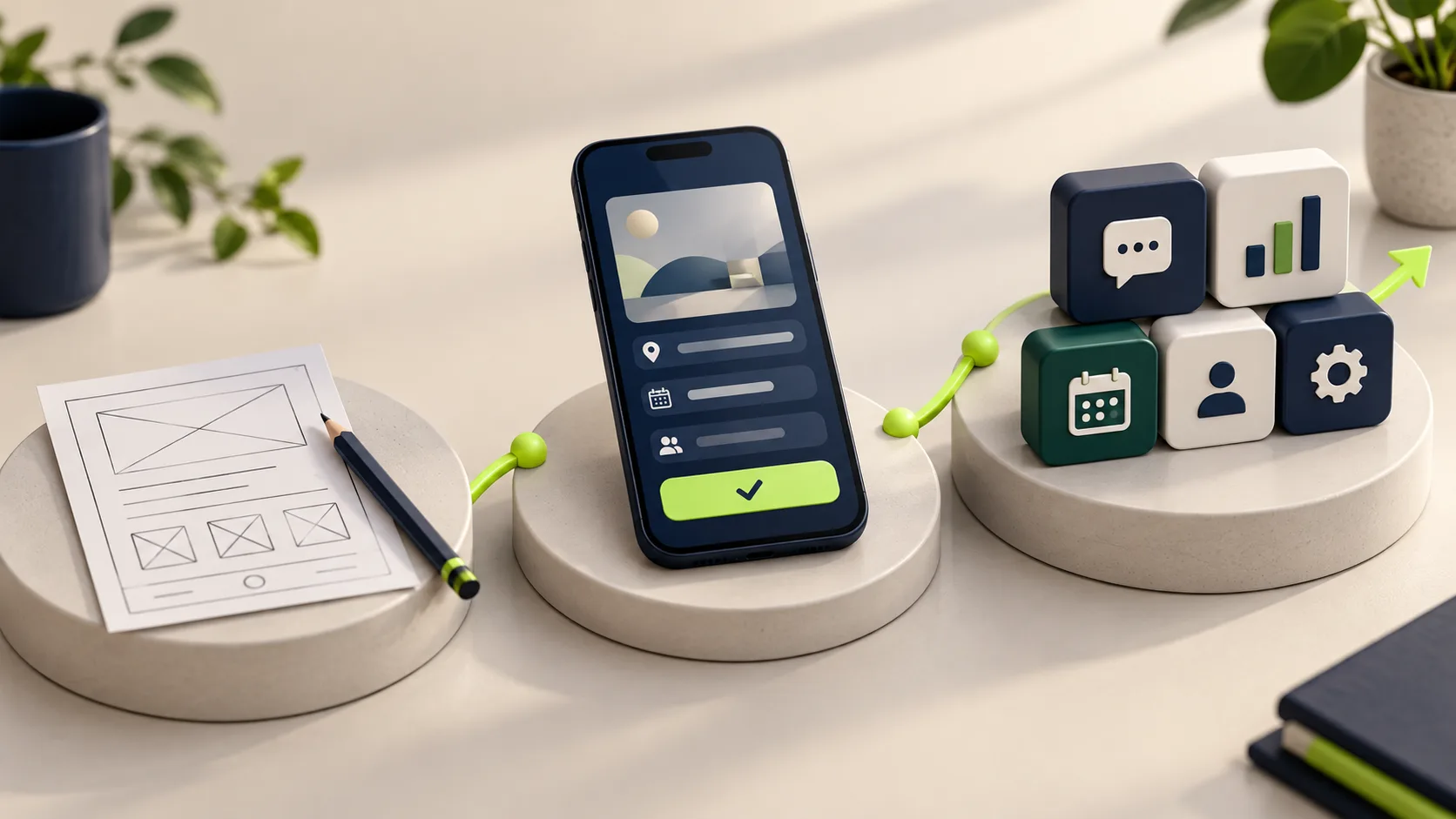
An MVP example: a service booking app
This is an illustrative example, not a description of a completed INFINITY project. Imagine a business that lets customers book a service appointment.
- Initial version: choose a service, see available times, provide contact details, receive confirmation and let an administrator manage the booking.
- Business-dependent requirements: payments, staff selection or cancellation rules, if the main workflow cannot operate without them.
- Possible later additions: loyalty rewards, referrals, personalised offers and advanced reporting.
Define success before launch: how many people start a booking, how many finish it and where they stop. Downloads alone do not show whether the product is useful. Plan the relevant event measurement from the beginning.
Which costs go beyond programming?
- Discovery and planning: user needs, a prototype and a technical brief.
- Testing: devices, permissions, failure states and integrations.
- Publication: required accounts, listing materials and platform review when distribution through app stores is planned.
- Running costs: hosting, data storage and usage of paid external services.
- Ongoing support: technical updates, monitoring and agreed changes.
A proposal should distinguish one-off development costs from recurring charges. Clarify code and account ownership, access handover and what support is included after launch.
How should you compare app development proposals?
The same feature name can hide different scopes. “Login” may mean email sign-in alone, or it may include several roles, password recovery and additional verification. Compare agreed deliverables, not just the total price.
- Give each provider the same brief.
- Request a list of features, exclusions and handover materials.
- Agree milestones and acceptance criteria for each stage.
- Define how additional requests will be estimated.
- Identify the costs and responsibilities that remain with your business.
What should you prepare for an estimate?
You do not need a complete technical specification for an initial discussion. A short brief should describe:
- the problem and intended users;
- the three most important actions;
- the required platforms;
- existing systems, data and design assets;
- who manages daily operations and their permissions;
- preferred timing and a working budget range, if available.
Examples of other apps help when you explain which parts matter: the booking flow, search or notifications. “Everything like this app” is not a sufficiently clear scope.
Frequently asked questions
How much does app development cost in Georgia?
A single price cannot fit every project. INFINITY estimates the work based on features, platforms, design, integrations and support. Send a short description of your idea so we can agree the first phase and specify what the proposal includes.
How long does an MVP take?
Timing depends on the core features, decision-making, required access and external integrations. A schedule should include design, development, testing and launch. Building screens alone does not produce a complete product.
Do I need a website or an app?
If the aim is presenting services and receiving enquiries from search, website development may be an appropriate first step. The case for an app is stronger when users need recurring workflows, a personal account or specific device capabilities. Base the decision on user behaviour.
Can security and testing wait until after the MVP?
No. You can reduce the feature set, but protecting user data, managing access and testing the core workflow belong in the first working release.
Can features be added in phases?
Yes, when the initial plan accounts for the intended development direction. Prioritise additions using real usage and business needs, with a separately agreed scope.
Plan your first app release with INFINITY
Share your idea, the main user task and a short description of existing systems. Through our app development service, we can assess the approach and agree the work involved. This makes the proposal specific to your business needs and intended outcome.