


5 min read
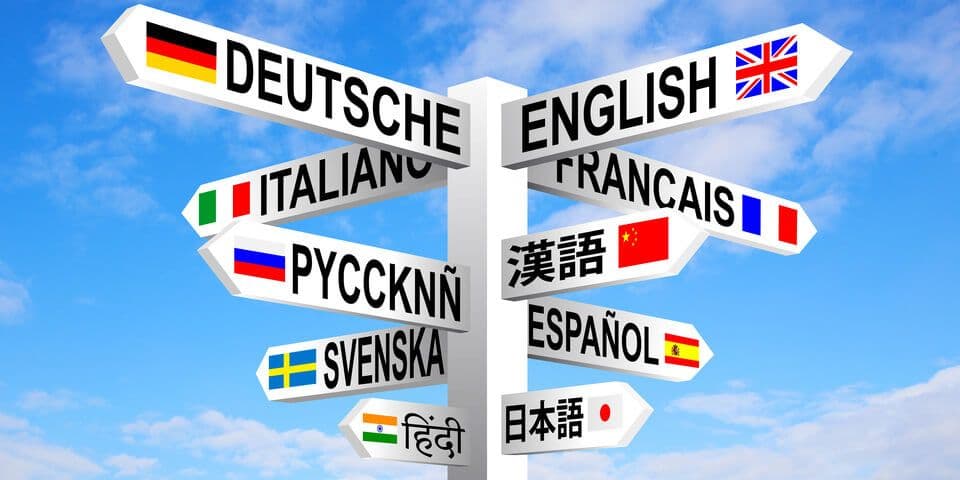
A single-language website becomes a hard limit as soon as part of your audience does not read Georgian — when you already have customers abroad, work with tourists, look for international partners, or plan to enter another market.
At that stage a multilingual website is not a translation job. The decisions that determine whether it works come earlier: which languages you actually need, how the site is structured, and what your customers type into Google in each language.
Start with the languages you can maintain
Companies tend to assume more languages is better. In practice, two well-built versions outperform four or five where some pages are translated and some are not.
For a business operating in Georgia the usual combination is Georgian and English; in some sectors Russian still matters. The decision should follow your customers, not a competitor's language menu.
A real estate company that regularly sells to foreign buyers needs an English version. The same holds for tourism, legal services, healthcare, logistics, and any field where foreign clients are a meaningful part of the business.
If a new site has to work in several languages from day one, put that in the brief at the website development stage. Changing the structure later, or adding a language to a site never designed for one, causes far more trouble.
Translation is not localization
The most common failure on multilingual sites is word-for-word translation.
Georgian copy moved straight into English rarely sounds like English: a sentence that works in Georgian often lands as overly formal, or simply strange. Headlines, service descriptions, buttons and offers are where this does the most damage — those are the places where a visitor decides.
Localization means writing for the audience that will read the page, not translating the words of whoever wrote the original. A visitor should never suspect the text came out of a machine translator.
Give every language its own URLs
The technical side matters just as much. Each language needs its own clear URL structure:
example.ge/ka/example.ge/en/example.ge/ru/
Visitors then see which version they are on, and search engines can connect the language versions of a page to one another.
One detail gets missed constantly: if someone on a service page switches language, they should land on that same service in the other language. A switcher that drops everyone back on the home page forces them to hunt for what they had already found.
SEO per language, not translated SEO
Say the keyword that matters on your Georgian page is საიტის დამზადება — website development. Its literal English translation is not automatically the phrase that will bring you traffic.
An English-speaking visitor is more likely to search:
- website development;
- web development company;
- website design company.
Keyword research has to be done separately for each language. Competitor analysis is worth the time too, especially when you are entering a market whose search vocabulary you do not know yet.
The same applies to meta titles, meta descriptions, page headings and body copy. An English page carrying nothing but translated Georgian text leaves most of its SEO potential unused.
Technically, hreflang tags, canonicals, the sitemap and indexing all need handling. None of it is visible to visitors, all of it matters to search engines, which is why SEO optimization belongs in a multilingual build from the start, not after launch.
You do not have to translate everything
On a large site, begin with the pages that carry the decision.
The usual first wave:
- the home page;
- services;
- about the company;
- projects or products;
- contact;
- frequently asked questions.
A blog does not need translating article by article; pick the topics a foreign reader would realistically search for.
Make the language switcher obvious
The switcher should not be hidden. People need to find it easily on desktop and on a phone; the top menu is usually the most workable place.
Sending visitors into a language automatically, based on location, is not always right either. Someone browsing from Georgia may be a foreigner; someone browsing from Europe may be Georgian. Let people choose.
What a badly built multilingual site looks like
One version gets updated and the other does not. A Georgian button survives on an English page. After a form is submitted the visitor ends up in a different language. A page has no translated counterpart at all.
Individually these look like small details. Together they shape how much a client or a partner trusts the business — and it gets harder when new services, products and articles are added regularly and the versions drift apart.
When a multilingual site is worth building
If you already serve foreign customers, a multilingual site is a real business need, not a nice-to-have. Better still is planning several languages before the project starts; adding one to an existing site is possible later, but usually means extra technical work.
If your business will not stop at the Georgian market, plan the multilingual structure at the first stage of the build. Get a consultation on website development and settle the structure before the project begins.